
Podcast: Download

 Are you more afraid of rocking the boat or looking like a wimp?
Do you see your current life as a diversion or as the training ground for being your best?
And how can you walk the razor’s edge between being a passive wimp and the aggressive tough guy?
This week, legendary author and peaceful warrior Dan Millman is on The New Man to help you confront your fears, quit settling for less and live THIS life in the moment.
In this episode:
- What is a peaceful warrior and why should you care?
- How to live your life as a peaceful warrior
- Is spirituality just some idealistic, high level, pie-in-the-sky cream dream or does it reside where “the rubber meets the road?”
- How to tell the difference between objective and subjective fears
- What to do if you’re on the fence or have a difficult choice to make
- How to find a teacher
- How to tell if you’re on the “right path” or not
- How to handle confrontations
- How important is the body in walking the path?
- Can Dan Millman take Deepak Chopra in a cage match?
- The single practice to help you get the most out of this life
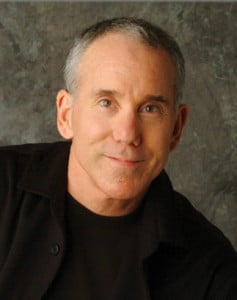 Dan Millman is a former world champion athlete, university coach, martial arts instructor, and college professor.
After an intensive, twenty-year spiritual quest, Dan’s teaching found its form as the Peaceful Warrior’s Way, expressed fully in his books and lectures. His work continues to evolve over time, to meet the needs of a changing world.
Dan’s thirteen books, including Way of the Peaceful Warrior, have inspired and informed millions of readers in 29 languages worldwide. The feature film, “Peaceful Warrior,” starring Nick Nolte, was adapted from Dan’s first book, based upon incidents from his life.
Much of Dan’s time is devoted to writing and speaking. His keynotes, seminars, and workshops span the generations to influence men and women from all walks of life, including leaders in the fields of health, psychology, education, business, politics, sports, entertainment, and the arts.
Dan and his wife Joy live in northern California. They have three grown daughters and two grandsons so far.
Click here to learn more about Way of the Peaceful Warrior by Dan Millman.
Transcript
Why the peaceful warrior matters
Tripp: Welcome to The New Man. Today, we're talking with Dan Millman, who has done and accomplished a ton of things, but you may know him as the best-selling author of The Way of the Peaceful Warrior, which was also made into a popular film. Dan, it's an honor to have you on The New Man. Thanks for talking today.
Dan: Pleasure to be with you here, Tripp.
Tripp: So I wanted to explore with you how a man can live his life as a peaceful warrior. But before we dive in, why would the guy stuck in traffic right now care? What does the peaceful warrior have that the average guy does not?
Dan: Well, that's a good question. Let's start with a guy stuck in traffic, because there's so much philosophy going around, and idealistic notions about spirituality and abstract concepts. It comes down to this: what do we do when we're stuck in traffic? If we're late for an appointment, it's natural to feel whatever we feel. We might feel frustrated. We might feel under stress. That's part of life. We've all been stuck in traffic or had other situations where things change and we're disappointed. That's when the rubber hits the road, because it's easy to talk the talk and give people all kinds of idealistic advice. But what do you do when you're stuck in traffic?
The first thing I would say, if you want to define it the way a peaceful warrior might respond, is to accept your feelings. Whatever they are is natural to you in the moment. I don't tell people how to fix their feelings and feel differently, because you're going to feel differently in ten minutes anyway. Feelings pass like the weather. So you accept your feelings and thoughts. That's not a problem. You don't have to judge them, fix them, or feel bad about them. Just feel what you feel. But the focus is: what are you going to do right now?
One thing you do is take a deep breath. Breathing is good for you. People forget about that. We hold our breath, blood pressure goes up. Take a few breaths and just enjoy breathing. Meanwhile, if you're learning a new language, throw the CD on, or listen to the radio, or listen to a book on tape. Improve yourself. Sometimes you're disappointed when you get to your destination because you want to hear the next thing in the novel you're listening to. So make good use of your time.
And the third thing is just to focus on what you need to do constructively. Whether they see themselves as peaceful warriors or not, Tripp, I don't suggest that they feel courageous and peaceful and happy and loving. I just suggest they act that way. Behave in a grateful way. Say thank you. Say I'm sorry. We have cause to do both. I didn't mean to go off in this monologue, but I'm enthusiastic, and you asked the question. Moving from there, I can explain a little more about what I mean by peaceful warrior. Would you like me to get into that a little bit?
Tripp: Yeah. Define it. What is the peaceful warrior? Because in and of itself, this sounds like a contradiction.
Peaceful heart, warrior spirit
Dan: Yeah. How can you be peaceful and a warrior? Well, anybody who's been involved with the martial arts, anybody who's been a soldier, knows that all of us are striving to live with a peaceful heart. A lot of us want a sense of inner peace, relaxation, a kind of mellowness as we go through life, taking things as they come. So we're all striving for a peaceful heart, but there are times in our lives we need a warrior spirit, because it takes courage to live in this world. It takes courage to love somebody in this world. Our nerve endings are right out there. So that's why I recommend people approach life with a peaceful heart but a warrior spirit. That's what the term means. It's not really an oxymoron. One term balances the other.
There have been a lot of peacemakers who were nourishing and kind and supportive and loving, but not all of them had a warrior spirit. And there have also been warriors in this world who were strong, committed, brave. You've got to give them credit for that. People put themselves in harm's way, but not all of them had a peaceful heart. Mahatma Gandhi described himself as a soldier of peace. Martin Luther King, and many others, male and female, lived that way. So we're all peaceful warriors in training. It's not a club you need to join. You don't need to do some initiation. Daily life is our initiation. We're all in this together.
Tripp: I think that's amazing, because so many guys who listen to this are imagining, "I'm trying to find my path. It's somewhere out there." And a lot of what I'm hearing you say is you've got this on day one, and even if you're stuck in traffic right now, this is the path. This is what your life is throwing at you right now, and this is how you deal with it. Is that right?
Dan: Absolutely, Tripp. You're right in tune with it. A guy came to me once and said, "Dan, I saw your movie, and I read your book Peaceful Warrior, and I'm more interested in spirituality and practice. But I've got a wife and three kids and a full-time job. What am I going to do?" He came to understand that his wife, his children, and his full-time job were his spiritual practices. The challenges of daily life are forms of spiritual weightlifting to strengthen your spirit. They demand more and will develop you more than sitting in a cave somewhere meditating. I know, because I've done both. The arena is right here and now. It's not elsewhere. It's not just sitting and imagining the energy centers of the body and doing these internal exercises. Maybe there's a place for those at times, but daily life is our school.
I'm working on a book right now called The Four Purposes of Life. It won't be out for a year and a half or so, but it's going to clarify the four purposes we're working with, and it's in the school of daily life. That's where we get our training.
Finding a teacher
Tripp: Awesome. You had Socrates in the book and in the movie. How important is a teacher to point this stuff out? What if the guy at home can't go find a kind of wacky guy hanging out at the gas station? What does he do?
Dan: Well, there's a popular saying that's gone around a lot. I'm sure you've heard it: when the student is ready, the teacher appears. Many people imagine that means when the student is prepared, then mystically some teacher like Socrates, a gas station mechanic, is going to appear and lead him up the path. It doesn't really mean that. It means that when the student is actually paying attention to the lessons all around, which repeat themselves until we learn them, the teacher appears everywhere. I wrote Way of the Peaceful Warrior so my teacher, the old guy called Socrates, could become your teacher, and anybody's who reads the book. I've actually had four other major mentors in my life that I'm going to go into in a future book.
So it's not a matter of waiting for some guru, parent figure, or wiser person than we are. Yes, there are smart people in different fields, and we want to make use of the wisdom around us, but we always want to check it against our inner knower. You don't want to give anybody your power. I've learned that's a little dangerous. As tempting as it might be, when we're tired of making decisions, we'd like to find a great guru or mentor who will just tell us what to do. But it's best to check whether it really feels right to us. It's very important to honor ourselves in that way.
Passive, aggressive, or assertive
Dan: Now, again, this idea of the peaceful warrior has a balance to it. It's about having our head in the clouds but our feet on the ground. In your show, you talk about finding a balance between being a macho jerk and a new age wimp. That's a fun way to put it. I've been trained in numerous martial arts over the years. In self-defense, one of the things we're taught is, if you're confronted by somebody verbally, say you get a fender bender and end up having words, you want to avoid two things. You want to avoid being passive, and you want to avoid being aggressive. Passive draws in bad energy, being kind of wimpy. That's what you call the new age wimp. And aggressive, the macho jerk, draws in bad energy too. You want to find the balance between those, which is the word assertive. You keep eye contact. You stand your ground. You have a soft voice. You don't escalate things. You de-escalate where you can, but you balance between the aggressive and the passive by being assertive.
Tripp: There's so much shame around guys stepping into their power, and at the same time, it's so needed. They feel like a guy who's being aggressive or powerful is, quote, unquote, a bad thing. But at the same time, it's not a good thing to be passive. It's not a good thing to be a spineless wimp.
Dan: Well, again, there's a balance. There are times to back off and say, "Hey, I'm sorry, it was my fault." For example, if I were pulling into a parking space and some guy screeched up and said, "That was my space. Now get out of there." You might go, what are you going to do, Dan? What if my wife's with me? Would I want to look like a wimp? You know what I would probably do? I think the wisest course is to say, "Hey, I'm really sorry. I didn't see you. I just didn't know you were there. Listen, if it's that important to you, I can give up the space, it's your space." Often the guy will go, "Oh, never mind, man," and just walk off. That may seem like a wimpy response. But people have been killed over parking spaces. A guy has crazy road rage, he's on drugs. Or you throw a fist, and even if you win the fight, you can be in a six-month legal battle after that. So it's not worth it.
Now, if somebody's going to attack a guy in the street and there's nothing he can do, or attack his loved ones, you've got to give them all you've got. But short of that, you de-escalate. You apologize, but you don't have to do it in a wimpy way. Many guys are afraid of crying like a little girl, as they say. They're afraid of looking like a wimp, and their sense of worth is tied to being a man. We have these expectations about how men are supposed to behave. They're not supposed to behave like idiots. They're supposed to be strong and firm and have a sense of themselves, but also friendly, recognizing that maybe that guy's had a really bad day. Maybe his wife just left him or he lost his job. So it's again that balance between macho and wimpy.
I had a friend who was an ex-Recon Marine, twenty-seven years in the martial arts, really a tough guy. He was at a zoo with his daughter, and they were getting in line, and some guy, another big guy with his daughter, stepped right in front and shouldered him and butted in front of him in line. My friend said under his breath, "Wow, some people are in a hurry, I guess." And the guy turned around, because he heard him, and said, "You got a problem with that, buddy?" I'm telling you, my friend could have wiped the floor with this guy. But you know what he did? He said, "Hey, buddy, no, I've got no problem at all. Have a good day." Now, is that a wimpy thing? Did he look foolish in front of his daughter? But what did he lose? A little embarrassment. The other guy felt like a big guy, whatever, he needed it, and he was able to show off to his daughter how tough he was. But my friend said, is it worth it? It's not. If you get held up, give them your money. You can replace a wallet and money and credit cards.
Tripp: Yeah. It seems like there's a line here. If I'm trying to defend something because I'm not really strong, I'm coming from that place. But a real place of strength, a real place of assertiveness, and really being rooted, means I've got flexibility. I know that this is not truly a threat to me. Is that what you're saying?
Dan: They say any landing in a plane where you walk away is a win. And any time you're confronted by somebody and you both walk away uninjured, that was a win. That was a victory. That was smart. All the examples I've given so far are giving in, and it sounds like, well, where's your martial arts training? Well, the best martial artist will avoid at all costs hurting somebody. Now, again, if you're put in a corner and they're going to hurt you, then you give them everything you've got. That's a different story.
I'm using martial arts analogies because you told me this is a program a lot of men enjoy, and I wanted to speak man to man. I travel a lot in new age circles and spiritual circles. Once in a while I meet these guys who wear all white, they do lots of yoga, and they talk very nicely. And when I shake hands with them, they kind of hold my fingertips. I want to slap them around a little bit, like, man up a little bit. Because there's an imbalance there. Nobody's so peaceful, so gentle. We're here to be men, but what does that mean? It doesn't mean being a tough guy and proving it all the time.
Fear, anger, and sorrow
Dan: Men have fear. Men and women handle emotions differently. Of the three primary emotions, fear, sorrow, and anger, men feel safer being angry than they do being afraid or sad. That's why in many men's groups, if a guy can just cry and show sorrow, grieving in front of his friends, it's like a transcendental experience. Men tend to react with anger when they're actually hurt or afraid. Anger is the only tool they've got in their toolbag. Even though they don't realize it, the chicks love it when a guy's vulnerable. They love that.
Women have a different problem. Women feel safer being afraid or sad than angry, because if a woman gets angry, boy, that scares men. I don't admit it, but, oh man, an angry woman. It's like having your mother angry. It brings back some primal things. So women are much safer showing sorrow or fear. I don't mean to go off on too many tangents, but these are issues we're all dealing with. For a man to get confronted and feel fear is perfectly natural. If he's got a pulse, he's going to feel fear in a threatening situation. It doesn't mean he's a coward. Cus D'Amato, a famous boxing coach, said heroes and cowards feel exactly the same fear. They just respond differently.
Everyday life and the fear of change
Tripp: I love that. Beyond these confrontational scenarios and the fear thing, what does it mean to be a peaceful warrior in everyday life? We talked about the guy in traffic, but let's say he's a father. Let's say he's going after a new career. What does it actually mean in those contexts?
Dan: Sure. I'm done with my confrontational scenarios, but it's a good dramatic way to start.
Tripp: Yeah, it's great.
Dan: Again, a peaceful warrior is all of us. It's not a club you can join. There's not a set of rules you follow, but it does have to do with dealing with fear and behaving constructively and positively. I didn't say feeling positive all the time or thinking positive thoughts all the time. I said behaving in a positive way. And that can be applied to any aspect of life, whether you're dealing with a situation with your kids, or you have teenagers. When my kids were teenagers, I got along really well with them unless I said something stupid and insensitive. Anybody with teenagers understands that. We are confronted in our relationships. There are challenges in raising children, at work. We all face these challenges and we don't have to pretend to like them. But without those challenges, how do you develop? How do you get stronger and wiser and gain more perspective? How do you grow?
So it's a constructive approach to responding to life. It's become a cliché: we can't control what happens to us, but we have some control over how we respond. We don't have emotional control. We can't control what we feel in any given moment. Anybody who has tried that knows. If people could control what they felt, I would just tell everyone, my only advice is feel happy from now on. No. Feelings come and go, but we can control what we do.
Tripp: I get a lot of emails from guys who want to start living a life where they're more in line with their purpose, whatever that might mean for them. I get that language a lot. In his world, he thinks he may need to quit his job and get out of what he's doing and do something more meaningful, but his fear is what's keeping him down. That's his world. So what does the peaceful warrior do in that scenario?
Dan: There are different kinds of fear. Self-doubt is a form of fear. Insecurity is a form of fear. If you're saying, Dan, what if a man, and it could be women just as well, of course, wants to make a change in his career but he feels fear? Well, look. We all know that to swim across the pool, you've got to let go of one side before you swim to the other. Choice means giving up something you want for something else you want more. The fact is, some people, and I have friends like this, settle. They settle for a job. They sigh about it. They're not really happy with it. They complain about it. But they settle because the options are maybe too risky.
I'll tell you, fear is a wonderful servant, but it's a terrible master. When we look back on our lives someday, we're not going to regret what we've done as much as what we haven't done. And we often haven't done things because of fear, insecurity, self-doubt. We let that hold us back.
But there are two kinds of fear: objective fear and subjective fear. Objective fear is if you're afraid for your body. If you're in a situation where you could be injured or killed, then pay attention to the fear. It may tell you to avoid a situation, to take precautions, to prepare. But then there's subjective fear. If we're afraid of failing, if some people are afraid of succeeding because they don't know what will happen then, if some people are afraid of looking foolish, being embarrassed, being ashamed, being rejected, those fears are subjective. They don't break bones. They just deal with some emotional difficulty. You can get over that. That's when you cut through it. And the elation and the empowerment you feel, having done what you feared, is in direct proportion to how afraid you felt. Courage is not the absence of fear. Fear is there many times in our day. Courage is the conquering of it. It's being afraid, saying I have a purpose here, and then doing it.
Somebody came up to me once and said, "I want to be a writer." I said, "Have you written anything lately?" "No, I haven't. I'm really going to. One day I'm going to…" And I said, "Oh, you don't really want to be a writer." He was a little offended. He said, "Yes, I do." I said, "No, you don't." He said, "Yes, I do. I want to be a writer." "No, you don't. If you wanted to be a writer, you'd be writing." Because thinking about doing something is the same as not doing it. Those who say "I have a purpose" are often in a quagmire. It's like one of those Chinese finger puzzles where you stick your fingers in and you pull away and they stick. There are wishes and there are purposes. If you really have a purpose, if you're going for something, then you go for it. Fears will come up, insecurities, obstacles within and without. But dream big, start small, and connect the dots.
The role of the body
Tripp: I love it. How important is the physical aspect of things? It seems like so much of your work involves the body. How important is the body in this process?
Dan: Well, years ago I was a world champion gymnast on the trampoline, and I won a couple of national championships too, and I trained in martial arts. I was a coach at Stanford University and a college professor of physical education in Ohio. So I've been involved with physical things. It's helped keep me grounded in the work I do in my various books. Obviously, spiritual life starts on the ground, not up in the air. A lot of people want to travel out of their bodies and haven't even gotten into them yet. So certainly the body is our foundation. It's the only thing we're guaranteed to keep our whole lifetime. Many of us feed our dogs better than we feed ourselves.
Sometimes people come to me with an emotional problem, or what they call a spiritual problem. The first three questions I ask them are: one, are you getting regular moderate exercise? Two, are you eating a balanced diet? And three, are you getting enough rest? You do those three things and that gives you a foundation. Notice I didn't say vegetarian, all raw, vegan, grown in season, slow foods. I just said a balanced diet. Find out what works for you. Eat a little less of what's not good for you, a little more of what is. Keep it pretty simple. And regular moderate exercise doesn't have to be gut-grinding. Just breathe deeply, move your muscles, stretch a little bit, walk. You do those things and you feel better. Your whole day, you're ready to face whatever you have to face. So yes, I do put an emphasis on not ignoring the physical body.
One practice: the present moment
Tripp: Excellent. So what's one thing a guy can do today that will help him walk this path of the peaceful warrior? We've covered quite a bit of territory here, so let's net it out. What's the one little nugget he can take away today?
Dan: There's a guy who wrote a book, and he said, "I wanted to tell the world just one word. Unable to do that, I became a writer." Or they say people teach what they need to learn. I must need to learn a lot, because I've written fourteen books and counting, and I've got two more coming out soon. Each one is different from the others: The Life You Were Born to Live, No Ordinary Moments, The Laws of Spirit. So to say, what's one thing? Let me just say it's certainly not the only thing people can do, but let me give one focus that might be very helpful to men or women out there. And that is to start to notice what's real.
For example, what's real in your life and mine right now is our conversation. We're in the present moment, and we're speaking. What I did this morning is no longer real. It's in the past. It's a set of memories, electrical impulses in my brain. What I might do later today, even ten minutes from now, is not real, just my imagination. We spend most of our lives in the past and the future, wondering what we're going to do, what we already did, dragging baggage from the past. If we just focus more on this one moment of reality, we can handle that. Mark Twain said, "I've had many troubles in my life, most of which never happened." Because most of the troubles we have are past and future: anxieties, regrets. If we just focus on what's in front of us, that's probably the one thing I could share for now. Bring your attention as much as possible to the present moment. Past and future are nice places to visit, but you don't want to live there.
Tripp's recap of the big takeaways
Tripp: Let's knock down the big takeaways from this talk. Number one, spirituality isn't about high-level, abstract, or idealistic mind games. It's about where the rubber meets the road. In this case, Dan says your practice begins where your fears and frustrations arise. How can you bring positive actions in those moments where you're not necessarily feeling positive or constructive?
Number two. Being a peaceful warrior means you're approaching life with an open heart and a warrior spirit. Having just one or the other means you're out of balance. Having love, compassion, and the guts to confront challenges head-on is the key.
Number three. If you think your true path is somewhere out there, think again. Take a good look around. This is your path. This is your training ground. Cut the BS and realize that there is nowhere else to be. If you want to live your best life, you'll begin to see the growth opportunities and the teachings available whether you're stuck in traffic, dealing with a pain-in-the-ass job, or a dying cell phone battery. Again, how can you bring positive, constructive actions to these scenarios?
Number four. To bring positive, constructive actions to a scenario, you've got to start with the following. Take a deep breath. Now take another. After that, accept how you feel, even if you're pissed, hurt, or sad. Don't brush your feelings under the rug or try to change them. From this place, ask how you can create the best, most constructive outcome in this situation. If you get lost, orient yourself to the positive and courageous actions, even if you're not feeling positive or courageous in the moment.
Number five. When the student is ready, the teacher will appear. Now don't fixate on the outcome that a Socrates or Yoda is just going to magically show up for you. When you're really ready to learn, you'll start to see learning opportunities all around you, even in the most mundane situations. And if you do work with a teacher, remember to listen to your own inner knowing. Never give away your power.
Number six. When a challenge arises, avoid being passive or aggressive. The middle path is assertive. Stay present, stay focused, don't fold, and don't puff yourself up. Keep the situation in perspective. Ask yourself if the threat is about your safety or merely your sense of pride or vanity. Having true strength means you know when to engage in a confrontation, and that's typically only when your safety or the safety of someone else is in danger. Most of the time, we get threatened in what is really just a pissing match. Think about it. Be mindful of how and where you spend your energy. You can de-escalate a situation without being a wimp.
Number seven. The famous boxing trainer Cus D'Amato said heroes and cowards feel the exact same fear. They just respond differently. Fear is a natural response for all beings. The trick isn't to eliminate fear. It's to hone our response to it. Learn to separate objective fear from subjective fear. Objective fears are ones that threaten our physical safety and well-being. You'll want to address these immediately. Subjective fears are more about how we see ourselves and how we are seen by others. It's a fear of failure, success, shame, or rejection. Dan encourages us to slice through subjective fears because on the other side is elation and empowerment.
Number eight. If you're feeling stuck on the fence about a decision in life, remember that choice means giving up something you want for something else you want more. So what do you want more?
Number nine. A spiritual life starts on the ground, not in the air, and the body is our foundation. If you're dragging your ass along for any reason, ask yourself the following. Are you getting regular moderate exercise? Are you eating a balanced diet? Are you getting enough rest? If you answered no to any of these questions, address it immediately. Give yourself a fighting chance to confront your challenges head-on.
And number ten, keep it simple. Live in the moment. We've heard this many times before on The New Man, but I don't think we can hear it enough. Living your life stuck in the past or consumed with the future is a recipe for misery. Pull your head out of your butt and get in the moment. What is happening right now? What are you experiencing right now? What positive, constructive action can you take right now? If you get in the weeds, remember to come back to this moment. It's the only one you've got.
Listener questions and where to find Dan
Tripp: All right. Well, I've got a couple of questions from the listeners that they posted on Facebook. These are some heavy-duty questions. So do you think you could take Deepak Chopra in a cage match?
Dan: Well, I certainly wouldn't want to. There's one light and many lamps in this world, and I don't necessarily see eye to eye with every teacher, but I think each one is valuable. They bring a different perspective. So I wouldn't want to have any kind of tussle with Deepak. I'd rather give him a big hug. But I love this question. It's really a fun question.
Tripp: I thought it was fun too. I was like, all right, that's a left-field one.
Dan: Once in a while I do a handstand when I'm doing a seminar. I'll do a handstand on a chair, and I usually make a point of why I do it. But sometimes I'll mutter, "Let's see Deepak do that." But that's just for fun. He's a good guy.
Tripp: Excellent. And is there any word on another warrior movie? Could we expect to see any more on the warrior front?
Dan: Yeah, I may be working on the screenplay for one of my other books, which could make a great movie. It's called The Journeys of Socrates. It's a more recent novel I wrote about how a boy became a man, how a man became a warrior, and how a warrior found peace, which is so important today, because we've got to find a way in the world to break the cycles of retribution and revenge, this tribalism. The book has some larger themes, but it's an adventure story, an emotional roller coaster. So I may be working on a screenplay in the next few years.
Tripp: Okay, excellent. And where can we find out more about you, the fourteen books? You've just got so much to offer. Where do we go?
Dan: Easiest thing, one-stop shopping: you can just go to peacefulwarrior.com. I've got blogs there, commentaries on relationships, living in the present moment, on all kinds of topics, and they're free. There are little ten-minute video seminars on different topics. There are questions and answers. The mission statement is a good reminder for life, right on the homepage. Peacefulwarrior.com.
Tripp: Very, very cool. Dan, it feels like a sin to cram our conversation into thirty minutes because you've got so much to offer. I just appreciate…
Dan: We covered a lot, though.
Tripp: Yeah, we did. I just appreciate you taking the time today, and we'd love to have you back on the show sometime soon.
Dan: Tripp, it's a pleasure.